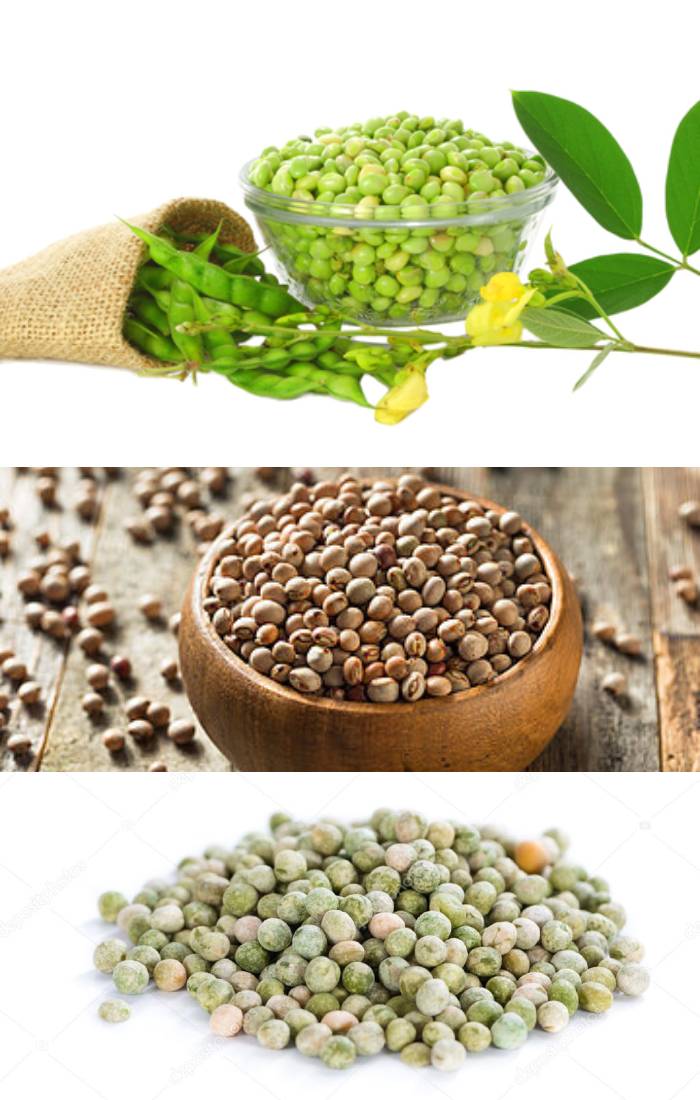
The crop originated in India with the major production occurring
in India and Myanmar (83%) ahead of Malawi, Tanzania, Kenya and Uganda as
major producers in Africa (14%). In West Africa, pigeon pea is a minor crop,
but it plays a key role in the subsistence of smallholders in other countries
such as Benin, Nigeria and Ghana. Moreover, pigeon pea has a huge untapped
potential for improvement both in quantity and in quality of production
in Africa.
Pigeon pea is a pulse crop that is able to tolerate harsh conditions where other
crops such as maize fail. Economically it is processed into dhal or Dal and
exported to other countries to generate foreign exchange. Its ability to
withstand drought makes it an ideal crop for smallholder farming.Neglected
and underutilised crops, such as pigeon pea, could play a prominent role in
sustaining the livelihood of poor rural african populations by increasing
food availability, including protein uptake. In recent years, there has
been a continuous and increasing demand for nutritional foods rich in
proteins, vitamins and essential minerals. Pigeon pea is among the
crops rich in proteins and it has about 18% to 26% with some wild
types having protein content of 30% and above. It is also a rich
source of minerals such as potassium, phosphorus, calcium, magnesium,
sodium and zinc.
Our Experienced procurement team at Royal Afro Agrotech ensures a steady supply
of high quality pigeon peas,we source them from smallholder farmers in the
country.
We also ensure that we deal with a large pool of farmers hence were able to meet
up to your quantity needs not to mention that we have the best price margin
in the region.Don’t hesitate to order from us today!